
Car Insurance Laws Wyoming Drivers Should Know
Free to compare
What Wyoming Law Actually Requires
Wyoming law requires every driver to carry liability insurance meeting minimum limits of $25,000 per person for bodily injury, $50,000 per accident for bodily injury, and $20,000 for property damage. These are statutory minimums under state law—you cannot register a vehicle or legally drive without meeting them. The state does not mandate personal injury protection or uninsured motorist coverage, but liability is non-negotiable.
Proof of insurance in Wyoming means a statutory certificate of insurance filed by your carrier with the Wyoming Department of Transportation (WYDOT), Driver Services. The certificate—commonly called an SR-22 when filed for compliance purposes—is not a type of insurance. It is proof your carrier has issued a policy meeting state minimums and will notify WYDOT if that policy lapses or cancels. Most drivers never see this filing process because carriers handle it automatically at policy issuance. You become aware of it only when WYDOT requires proof after a specific trigger.
“Operating an unregistered vehicle triggers the same three-year certificate filing requirement as a DUI—most drivers don't realize that until WYDOT initiates revocation.”

Meet Wyoming's Requirements Without Overpaying
Get My Wyoming Car Insurance Quote$921.55
Wyoming Average Annual Auto Premium
Wyoming drivers paid an average of $921.55 per insured vehicle in 2023, among the lowest in the nation. Meeting the state's 25/50/20 minimums costs less than full coverage, but minimum liability leaves you exposed to out-of-pocket costs if you cause a crash.
NAIC Auto Insurance Database Report 2023
When Wyoming Requires Proof of Insurance
Wyoming requires proof of insurance at vehicle registration, at traffic stops, and after any mandatory license or registration suspension or revocation. The statutory certificate (W.S. 31-9-403) is required for DUI/DWUI conviction, mandatory revocation offenses under W.S. 31-7-127, and operating without a license or an unregistered vehicle. The filing period is three years for DUI cases, measured from the conviction date.
If you are stopped and cannot provide proof of insurance, you face a citation and potential suspension. If your carrier cancels your policy and you do not replace it within the state's grace window, WYDOT receives a lapse notice and suspends your registration.
Most households never trigger a mandatory filing requirement. You register your vehicles, your carrier issues policies, and proof flows automatically. The certificate becomes visible only when WYDOT requires it after a specific violation or administrative action.

Operating an unregistered vehicle or driving without a license triggers mandatory revocation and a three-year certificate filing requirement—even without a DUI.
Related Articles





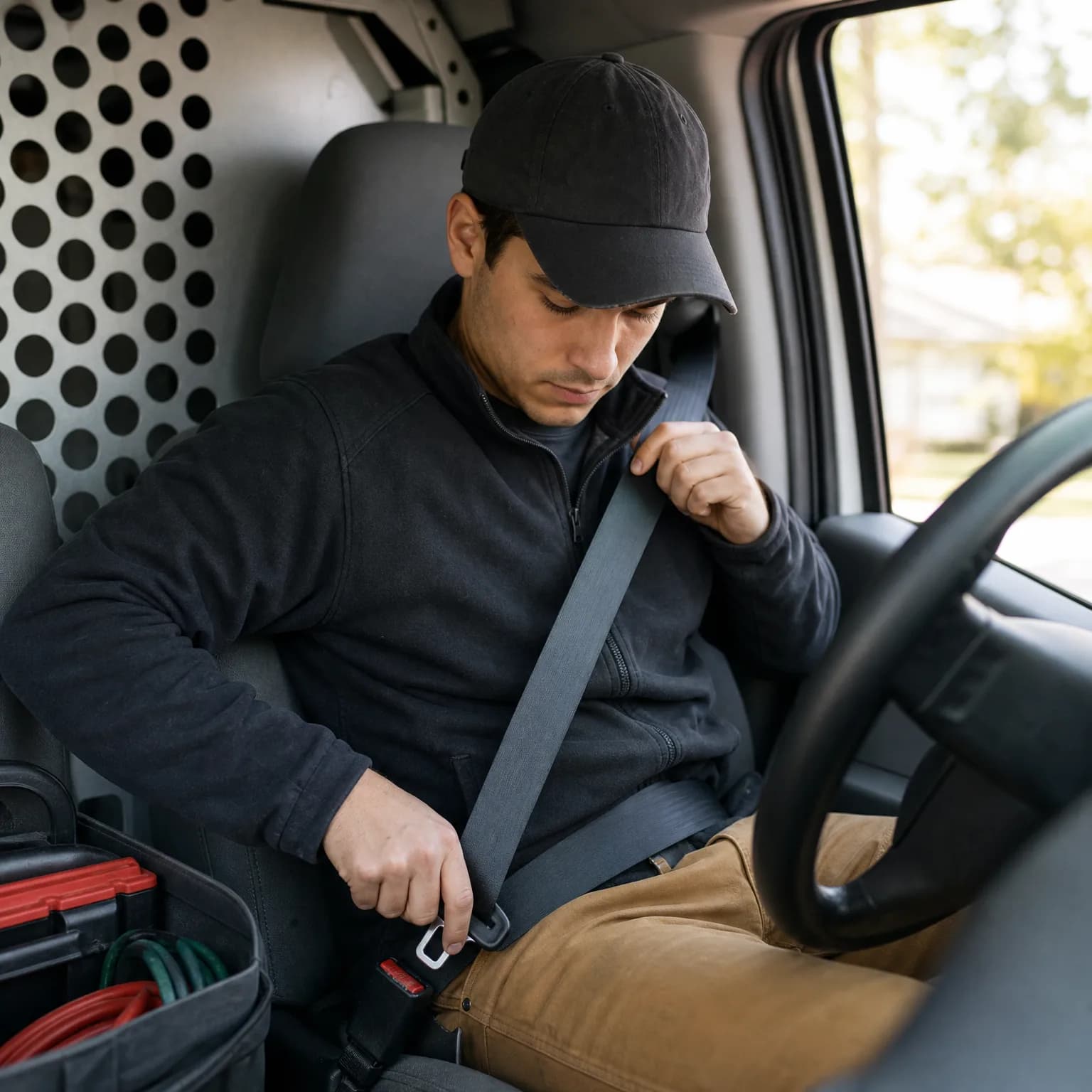

How the Statutory Certificate Works
The statutory certificate is filed electronically by your insurance carrier directly with WYDOT Driver Services. You do not file it yourself. When you purchase a policy from a carrier authorized to write in Wyoming, you tell the carrier you need certificate filing. The carrier submits the form to WYDOT, and WYDOT records the filing. If your policy lapses or cancels, the carrier notifies WYDOT within a set window, and WYDOT suspends your license or registration until you file proof of new coverage.
Not every carrier writes policies for drivers who need certificate filing. High-risk specialists and non-standard carriers are more likely to offer it. Carriers that write certificate policies in Wyoming include Dairyland, Bristol West, The General, Progressive, Geico, Farmers, National General, State Farm, USAA, and Liberty Mutual. If your current carrier does not write certificate policies, you must switch carriers to meet the filing requirement.
The certificate filing itself does not increase your premium. What increases your premium is the underlying violation—DUI, uninsured operation, or revocation offense—that triggered the filing requirement. Carriers price policies based on driving record, and a DUI or revocation offense places you in a higher-risk tier. The certificate is proof you carry coverage; it is not a separate product or surcharge.
6.7%
Wyoming Uninsured Motorist Rate
An estimated 6.7% of Wyoming motorists drove uninsured in 2023. While the state does not mandate uninsured motorist coverage, carrying it protects you when an at-fault driver has no insurance or insufficient limits to cover your damages.
Insurance Research Council, 2023

Probationary License and Hardship Relief
Wyoming offers a Probationary License for drivers whose licenses have been suspended or revoked and who need limited driving privileges during the suspension period. The Probationary License is not automatic. You must apply for a record review via the oneWYO online portal, email dot-dscomp@wyo.gov, or mail a written request with a $15 fee to WYDOT Driver Services in Cheyenne. If you are eligible, WYDOT mails you a forms packet.
DUI cases require additional steps: an alcohol assessment, completion of a Wyoming Department of Health-approved eight-hour DUI education class, and any recommended treatment. You must also file the statutory certificate (SR-22) before WYDOT will issue the Probationary License. Uninsured-operation cases are eligible for the Probationary License as well, but the same certificate filing requirement applies. Wyoming does not require ignition interlock for Probationary License eligibility in most cases, but the court may order it as a condition of probation.
What Happens If You Let Coverage Lapse
If your policy cancels or lapses while you are under a certificate filing requirement, your carrier notifies WYDOT within the required window. WYDOT suspends your license or registration immediately. The suspension remains in effect until you purchase a new policy, your new carrier files the certificate, and you pay the reinstatement fee. The three-year filing clock does not pause during the lapse—it continues running from the original conviction or revocation date.
A lapse also resets your carrier options. Many standard carriers will not write a policy for a driver with a recent lapse on record. You may need to move to a non-standard carrier, which typically charges higher premiums. The longer the lapse, the harder it becomes to find affordable coverage. Maintaining continuous coverage is the single most important action you can take to keep your license valid and your premiums manageable.
If you move out of Wyoming during the three-year filing period, the requirement follows you. Most states recognize certificate filings from other states, but you must notify your new state's DMV and ensure your carrier files the certificate in the new state. If you fail to maintain the filing in your new state, Wyoming will not clear the requirement from your record, and you will face suspension if you return to Wyoming and attempt to register a vehicle or renew your license.

Compare Carriers and Confirm Coverage
Wyoming's statutory insurance requirements are straightforward: carry liability limits of at least 25/50/20, maintain proof of insurance, and file the statutory certificate if WYDOT requires it after a revocation or DUI. The complexity arises when you need to find a carrier that writes certificate policies, maintain coverage without lapse for three years, and manage the premium increase that comes with a high-risk driving record. Compare carriers that write in Wyoming and confirm they offer certificate filing before you commit. Use the state's comparison tools to see which carriers serve your county and what coverage options they offer for your situation.
Mandatory Revocation Triggers Under Wyoming Law
DUI/DWUI conviction under W.S. 31-7-128 triggers a three-year certificate filing requirement. The clock starts on the conviction date, not the filing date. If you are convicted of driving under the influence, WYDOT revokes your license and you cannot reinstate until you complete an alcohol assessment, an eight-hour DUI education class approved by the Wyoming Department of Health, any recommended treatment, and file proof of insurance. The certificate must remain on file for three years without lapse.
Mandatory revocation offenses under W.S. 31-7-127 include operating without a valid license and operating an unregistered vehicle. These are not DUI cases, but they carry the same certificate filing requirement. If you drive a car that is not registered, or drive without a license in your possession, and WYDOT initiates a revocation action, you must file the statutory certificate and maintain it for three years to reinstate.
Get Your Free Quote
Get My Wyoming Car Insurance QuoteFrequently Asked Questions
What are Wyoming's minimum car insurance requirements?
Wyoming requires liability coverage of at least $25,000 per person for bodily injury, $50,000 per accident for bodily injury, and $20,000 for property damage. The state does not mandate personal injury protection or uninsured motorist coverage, but liability is required to register a vehicle and legally drive.
What is an SR-22 in Wyoming?
An SR-22 is a statutory certificate of insurance filed by your carrier with WYDOT Driver Services. It proves you carry a policy meeting state minimums. Wyoming requires it for three years after a DUI conviction, mandatory revocation offenses, or operating without a license or unregistered vehicle. The certificate is filed electronically by your carrier, not by you.
How much does it cost to reinstate a suspended license in Wyoming?
Additional fees apply depending on the violation that triggered the suspension. If you need a Probationary License during the suspension period, the record review application fee is $15. You must also purchase insurance and file the statutory certificate before WYDOT will reinstate your license.
Can I get a hardship license in Wyoming after a DUI?
Yes. Wyoming offers a Probationary License for drivers whose licenses have been suspended or revoked. You must apply for a record review via oneWYO, email, or mail with a $15 fee. DUI cases require an alcohol assessment, an eight-hour DUI education class, recommended treatment, and SR-22 filing before WYDOT will issue the Probationary License.
Which insurance companies file SR-22 in Wyoming?
Carriers that write SR-22 policies in Wyoming include Dairyland, Bristol West, The General, Progressive, Geico, Farmers, National General, State Farm, USAA, and Liberty Mutual. Not every carrier writes certificate policies, so confirm with your carrier or agent before purchasing a policy if you need SR-22 filing.
What happens if my insurance lapses during the SR-22 filing period?
Your carrier notifies WYDOT, and WYDOT suspends your license or registration immediately. The suspension remains until you purchase a new policy, your new carrier files the certificate, and you pay the reinstatement fee. The three-year filing clock does not pause—it continues from the original conviction date.