
Wyoming's Liability Minimums and What They Actually Cover
You're insuring two or more vehicles in Wyoming and need to know what the state actually requires on each policy. Wyoming mandates $25,000 bodily injury liability per person, $50,000 bodily injury liability per accident, and $20,000 property damage liability per accident. These are the floors. Every vehicle you register must carry at least these limits, and you must provide proof of insurance at registration and during any traffic stop.
The state does not require personal injury protection or uninsured motorist coverage. You can buy liability-only policies that meet the legal minimum. But the minimum limits were set decades ago and have not kept pace with medical costs, vehicle values, or lawsuit judgments. A household with multiple cars and accumulated assets faces a structural problem: the minimum limits protect the other driver, not your household's equity.
Compare car insurance rates in your state
Get quotes from licensed carriers — no obligation, no spam, results in minutes.
Get Your Free QuoteWyoming Liability Minimums
$25,000 / $50,000 / $20,000
These limits apply per vehicle. If you own three cars, each policy must carry at least these amounts. The per-person cap is $25,000; the per-accident cap is $50,000 regardless of how many people are injured.
Wyoming Department of Transportation, Driver Services
The Multi-Vehicle Household Gap
A single-car household with no assets can meet the minimum and walk away from most crashes with no personal financial loss. A multi-vehicle household with home equity, retirement accounts, or other assets cannot. Here's the structural reality: Wyoming's minimum limits protect the other party up to the stated caps. They do not protect your household's assets when you cause a crash that exceeds those caps.
Medical bills from a serious injury routinely exceed $25,000. A totaled vehicle can exceed $20,000. The $50,000 covers the first $50,000 of bodily injury; the remaining $20,000 in medical bills becomes a judgment against you personally. The property damage cap covers the vehicle; anything beyond that is your household's liability.
When you own multiple vehicles, the risk multiplies. Each car you drive is a separate liability exposure. A crash in any one of them can trigger a lawsuit that reaches your household's combined assets. The minimum limits do not scale with your asset base.
Wyoming's minimum limits protect the other driver, not your household. A judgment that exceeds the caps attaches to your assets directly.
What Full Coverage Adds to the Minimum
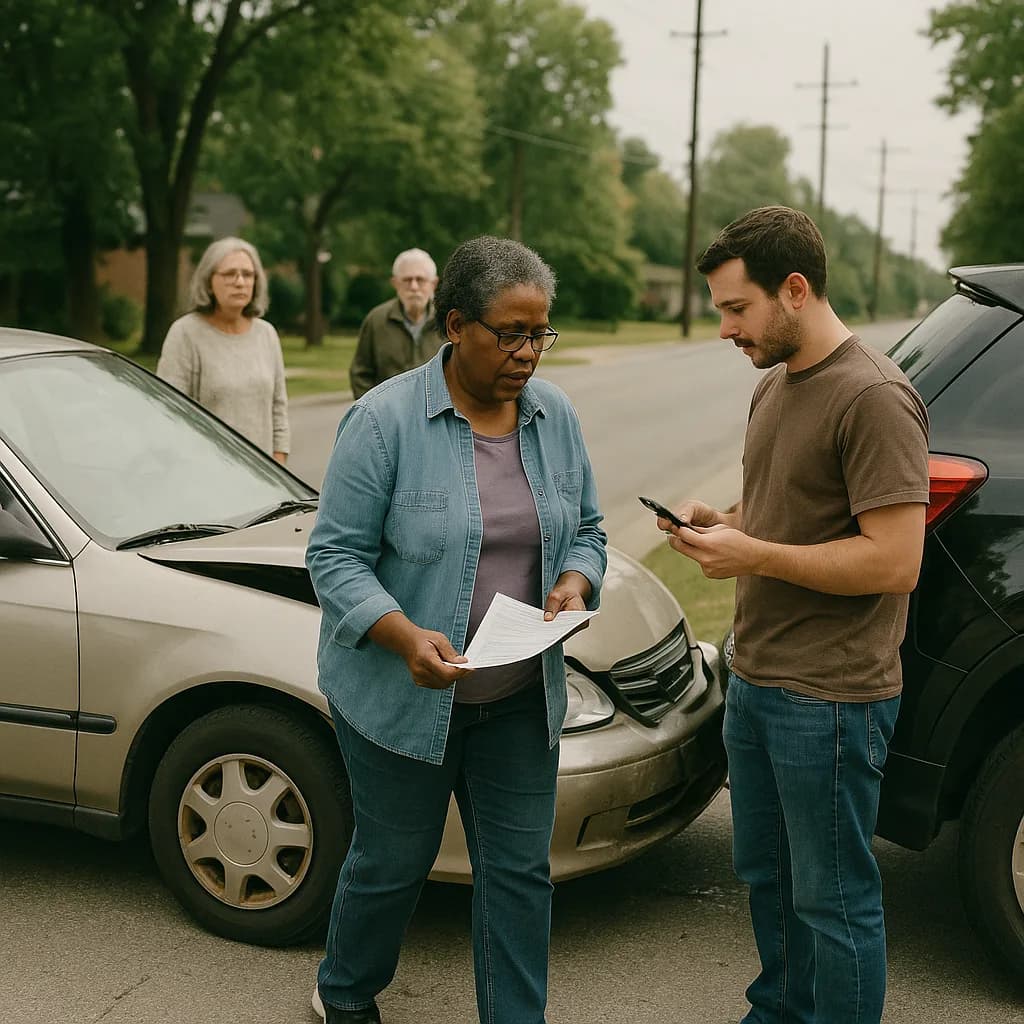
Collision coverage pays to repair or replace your vehicle after a crash, regardless of fault. Comprehensive coverage pays for theft, vandalism, hail, fire, and animal strikes. Both coverages carry deductibles, typically $500 or $1,000. You choose the deductible when you buy the policy. A higher deductible lowers your premium; a lower deductible raises it. When you own multiple vehicles, you choose a deductible for each one. The deductibles do not combine.
Lenders require collision and comprehensive on financed vehicles. Once the loan is paid off, the coverage becomes optional. Many households drop collision and comprehensive on older vehicles to lower the premium. The decision turns on the vehicle's value: if the car is worth less than ten times the annual collision premium, the coverage costs more than the payout you would receive after a total loss. For a multi-vehicle household, this calculation runs separately for each car.
Related Articles




Uninsured and Underinsured Motorist Coverage
Wyoming does not require uninsured motorist coverage, but 6.7% of Wyoming drivers are uninsured. If an uninsured driver hits your vehicle, their liability policy does not exist. Your collision coverage pays to repair your car, minus your deductible. But collision does not cover your medical bills, lost wages, or pain and suffering. Uninsured motorist bodily injury coverage fills that gap.
Underinsured motorist coverage applies when the at-fault driver carries liability limits lower than your damages. This coverage is optional in Wyoming, but it protects your household when the other driver's limits are inadequate.
For a multi-vehicle household, uninsured and underinsured motorist coverage applies per policy. The coverage does not multiply by the number of vehicles you own. It is a per-policy limit.
Wyoming Uninsured Motorist Rate
6.7%
One in fifteen Wyoming drivers operates without insurance. When an uninsured driver causes a crash, your uninsured motorist coverage is the only source of compensation for injuries your collision policy does not cover.
Insurance Research Council, 2023
How Adding Vehicles Changes Your Coverage Structure
Each vehicle you add to your policy re-rates the entire policy. The premium does not simply add a flat amount per car. The carrier recalculates the total premium based on the combined risk of all vehicles, all drivers, and all coverage selections. Adding a second vehicle typically lowers the per-vehicle cost because of the multi-car discount, but the total premium rises.
When you add a vehicle mid-term, the carrier prorates the additional premium for the remaining policy period. At renewal, the full annual premium reflects all vehicles on the policy. If you remove a vehicle mid-term, the carrier refunds the prorated premium for that vehicle. The multi-car discount applies only when all household vehicles sit on the same policy. A vehicle titled to a household member on a separate policy does not count toward the discount.
Compare Carriers and Coverage Levels
Seventeen carriers write auto insurance in Wyoming. Not all of them offer competitive rates for multi-vehicle households. Some carriers specialize in single-car policies; others build their pricing models around households with multiple vehicles. The multi-car discount varies by carrier. A smaller discount on a lower base rate can produce a better total premium than a larger discount on a higher base rate.
When you compare quotes, request identical coverage limits and deductibles from each carrier. The coverage structure drives the premium. Compare apples to apples. Request quotes for all vehicles at once so the multi-car discount applies from the start. Adding vehicles one at a time forfeits the discount on the earlier vehicles until the policy combines them.